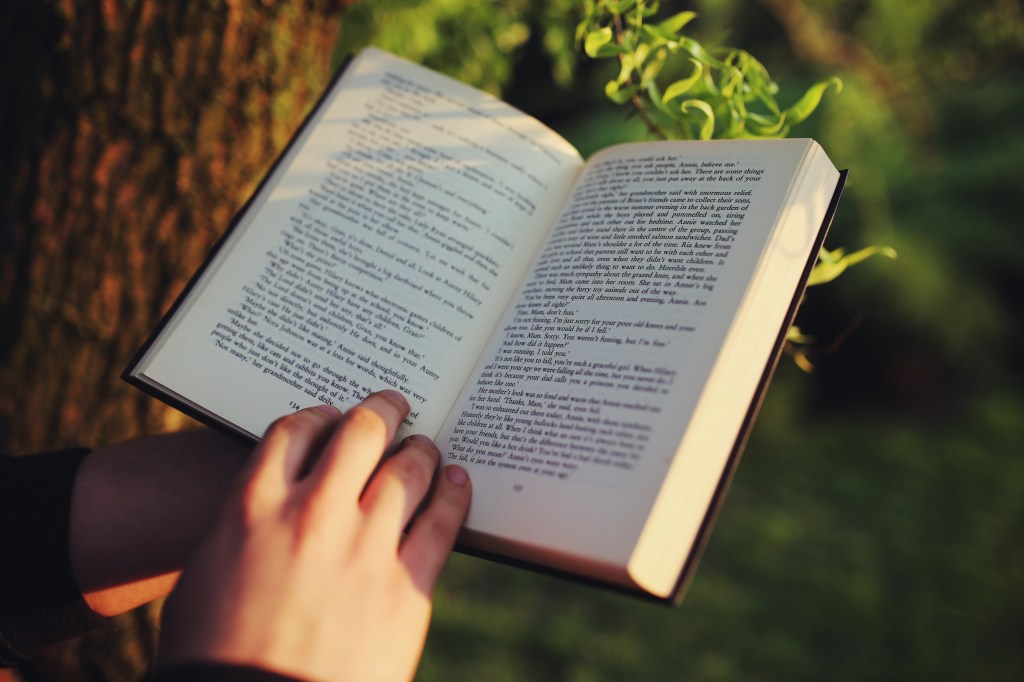
In the past, I’ve done exactly what you’re not supposed to do when pursuing any kind of goal: focusing on how many books I could read, instead of focusing on the value of each individual story.
Saying you can read 30 books in a year doesn’t make you a better writer. So having that kind of goal even on your checklist might be fun, and challenging – but it doesn’t get you any closer to your writing goals. At least, not directly.
I love books – I wouldn’t be a writer if I didn’t. I love stories. And knowing I wasn’t taking the time to really appreciate and think about each story I read was kind of heartbreaking.
So recently I started doing something different. Nerd that I am, I figured out that I take away much more from a book if I take notes as I’m reading.
I did not enjoy doing this when I was in school, for the record. Annotations, to me, ruined the whole experience (and took way too much time).
But the pressure’s off now. I have the freedom – and for the first time in a long time, the desire – to make as many notes about a book as I want to … but not on the pages of the book themselves, of course. I’m no monster.
Once I started doing this, everything changed.
80 percent of the time, my mind travels at light speed. It’s the side effect of being slightly obsessive about creating things and being productive, plus the eternal anxiety I can usually suppress but can never completely dismiss.
This makes both reading and writing extremely difficult. I am easily distracted by thoughts and ideas and to-do tasks, which is why I’m so, so grateful to be done with school (forever? Sure ….). If I’m not in a flow state – and it takes plenty of work to get there in the first place, as you know – I’m not retaining much.
Taking notes on the elements of the books I’m reading has made me fall in love with storytelling all over again (for about the ten thousandth time). It helps me organize my thoughts and, quite honestly, forces me to pay constant full attention to the narrative unfolding before me.
I used to hate writing book reviews, and now I can honestly admit it’s because I’ve spent a lot of time reading a lot but not always comprehending everything I should be. I’ve started to turn my (of course, pages’ worth of) notes into more detailed criticisms of the writings I consume. And I’ve decided to turn them into a new project, which I’m not telling you about yet, because I don’t know how long it’s going to take to set up. Patience.
But I didn’t start taking notes on books for the sake of starting a new project. Trust me, that’s the last thing I need right now. I did it because, in the back of my mind, I knew this would change the way I read books. English teachers don’t just make you annotate because they know you hate it, it turns out. It actually can make a difference.
I’m having flashbacks to my literary theory course in college (hi Dr. B!). I forgot how much I loved picking apart stories. Except this time, there’s not the pressure of getting an A. (wooooooo).
Figuring out what works in a story, and what doesn’t, is what makes you a better writer. You already know that. But it can also influence you to start taking your writing more seriously. You notice your own writing weaknesses in books written by other people. You realize you can afford to set the bar higher for yourself. You remember that this book in your hand was written by an actual person, who started out in the same place you did – not knowing a thing about writing at all.
You can tell good stories, too. And you will. As long as you put your creative self to work. As long as you take this whole writing thing seriously … at least, as seriously as you need to. Everyone needs to have a little fun every now and then, or writing becomes a chore. Don’t let that happen to you!
Reading is important. I’ll never dispute that point with anyone, writer or otherwise. But taking the time to analyze what you are reading, to think through every story on a much deeper level than the average casual reader, is even more essential.
You’re more than just a casual reader. You are a writer. That changes everything.
My best advice for you at this point is, annotate any way you want. I don’t like underlining and circling and marking up things in a physical book, so I don’t. I scratch out notes on an index card and use it as my bookmark for that book. It’s what works for me.
If you want to look deeper into the stories you’re reading, so you can write better ones yourself, figure out how to make it work for you. Then pay attention. Set a goal, so you’re motivated to keep reading, but focus on getting all you can out of a book before moving on to the next one. It will change the way you write. I can guarantee it.
Meg is the creator of Novelty Revisions, dedicated to helping writers put their ideas into words. She is a freelance writer and a nine-time NaNoWriMo winner with work published in Teen Ink, Success Story, Lifehack and USA TODAY College. Follow Meg on Twitter for tweets about writing, food and nerdy things.


Compose your words of wisdom